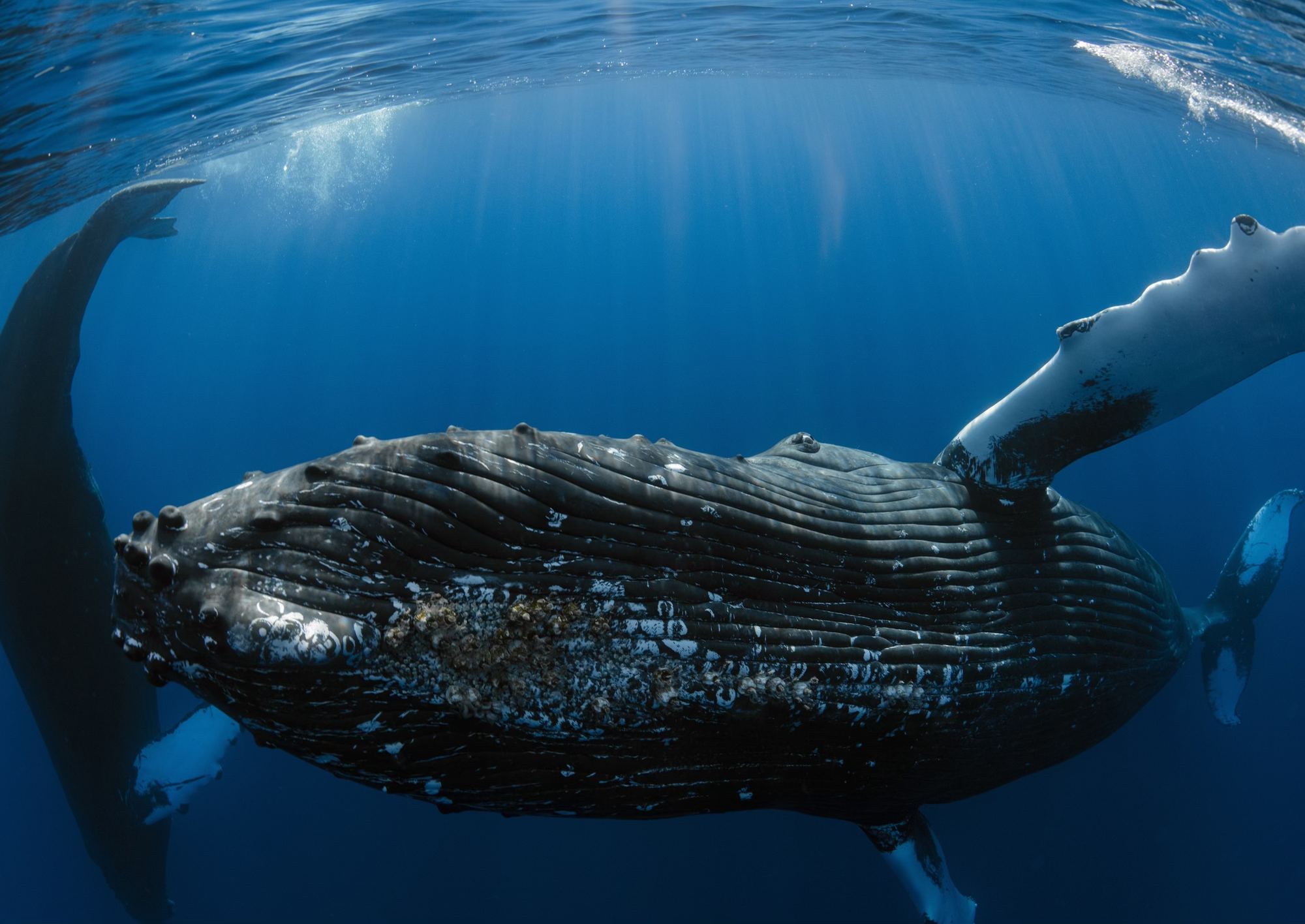
Whale Watching Tour from Kaʻanapali Beach
2 HoursKaʻanapali Beach, MauiSmall Public Group
- Price
- From $79 per guest
- Departs
- Kaʻanapali Beach, behind Whalers Village
- Group size
- Up to 20 guests
- Ages
- Ages 2 and up
Tours · December – April
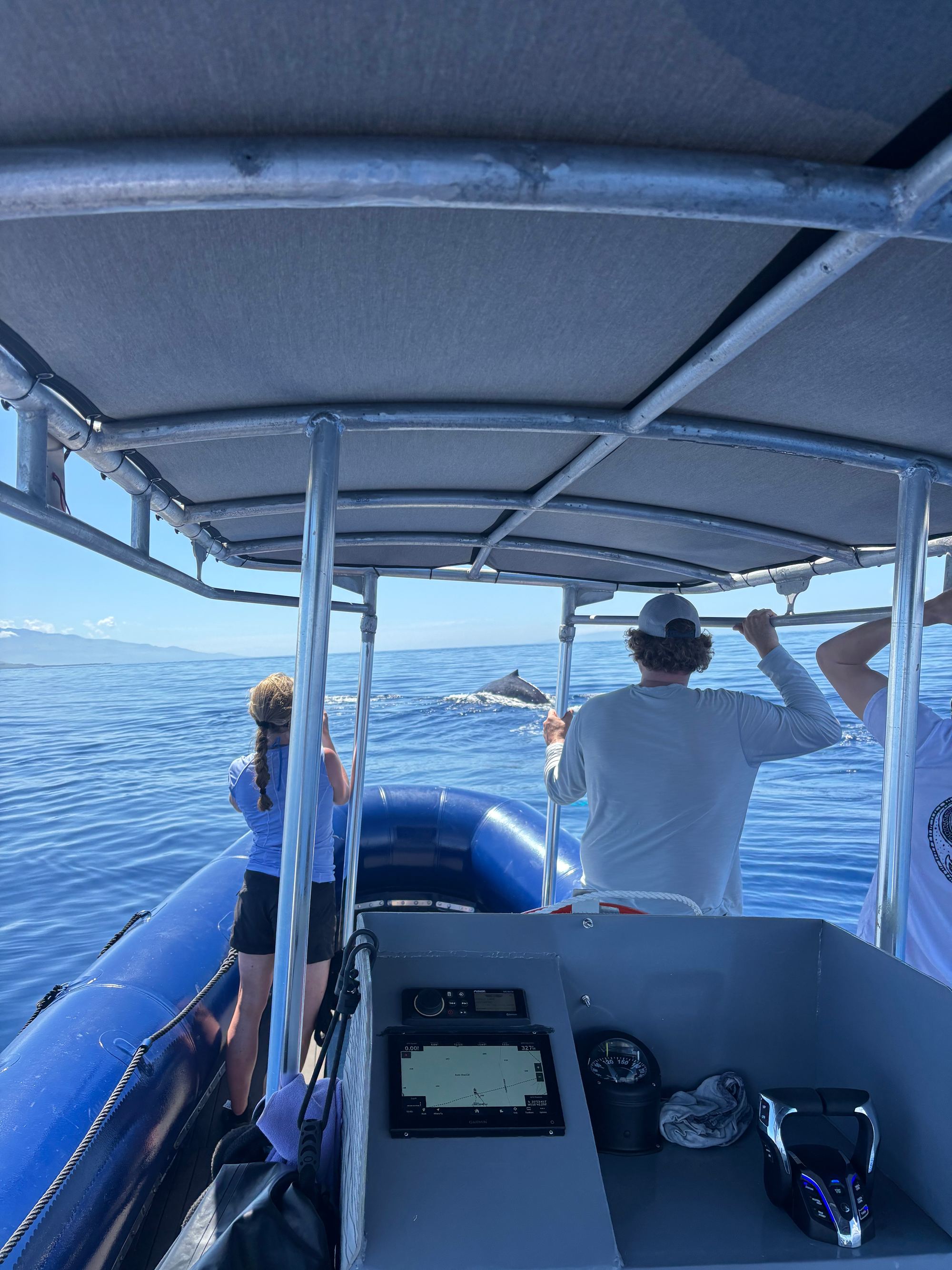
Every trip runs two hours on a fast, low, twin-engine raft with a certified naturalist and a hydrophone aboard. What changes is who is on the boat with you and where you leave from — off the sand at Kaʻanapali, or from Mala Boat Ramp in Lahaina for the sunset charter.
The whales are the same on all three. What differs is who else is aboard, where you walk to, and what time of day the light is doing something. Read down the column that matches your situation.
| Public Whale Watch | Private Whale Watch | Private Sunset Charter | |
|---|---|---|---|
| Price | From $79 per guest | From $1,350 per boat | From $1,250 per boat |
| Who is aboard | Up to 20 guests | Private charter, up to 20 guests | Private charter, up to 20 guests |
| Leaves from | Kaʻanapali Beach, behind Whalers Village | Kaʻanapali Beach, behind Whalers Village | Mala Boat Ramp, Lahaina — behind Safeway |
| Time on the water | 2 hours | 2 hours | 2 hours |
| Youngest guest | Ages 2 and up | Ages 2 and up | Ages 2 and up |
Take the public tour. At $79 per guest it is the least you can pay to be on the water, the group is capped at twenty rather than the hundred-plus a large catamaran carries, and you are close enough to the surface that a whale coming up beside the raft is at eye level rather than three decks below.
Take the private charter. The boat is the same and so is the crew; what you are buying is the absence of strangers and a captain who can answer your questions rather than twenty people's. Worth doing the arithmetic — for a group of eight or more the private charter is close to the public fare per head.
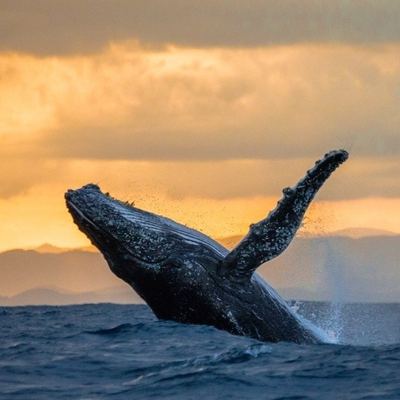
Take the sunset charter from Lahaina. Late light is the difference: a breach backlit at golden hour is a different photograph from the same breach at eleven in the morning, and the water off Mala is usually flatter by then. See whale photography for what the low, open raft does for a lens.
One boat, one crew, one standard. Whichever of the three you book, this is what you get.
The season runs December – April. It is not evenly distributed: the channel fills through December, peaks in the middle of the season when mothers and calves are resting in the shallow water between Maui, Lānaʻi and Molokaʻi, and thins again in spring as the animals start north. Any trip inside the season is a whale trip — the difference is how many, and how much surface activity you are likely to see.
The whale season guide walks it month by month, so you can match the trip to the week you are actually on island.
Not sure which one, or when to come? The whale season guide walks the migration month by month, the FAQ covers boarding and what to bring, and you can always call (808) 707-5751.
Staying in Lahaina? Where the boats leave from now. Bringing children? Whale watching with kids covers the age minimum, seasickness and what to pack. Shooting the trip? Whale photography covers the boat, the light and the kit.