
Mala Boat Ramp, Lahaina — behind Safeway
Private Sunset Charter
- 2 hours
- Private charter, up to 20 guests
- Ages 2 and up
West Maui · December – April
If you are staying in Lahaina and looking for a whale watch, the first thing worth knowing is where the boats actually leave from — because it is no longer Lahaina Harbor.
Lahaina Harbor has not been a working departure point for commercial whale watch boats since the 2023 fire. The West Maui fleet moved north to Mala Boat Ramp, at the top end of Front Street behind the Safeway — which is where most Lahaina whale watch tours now board, ours included.
Our private sunset charter leaves from Mala. It is a two-hour charter for your own group, timed so the last of the light is on the water while the whales are still active — the West Maui Mountains behind you and Lānaʻi across the channel.
Our public tour leaves from Kaʻanapali Beach instead, about ten minutes up the coast. That is a deliberate choice rather than an inconvenience: boarding is by shuttle straight off the sand, so there is no harbor to drive to, no parking structure and no queue on a dock — and the whales in the Auʻau Channel are the same whales either way.
Mala Boat Ramp, Lahaina — behind Safeway
Kaʻanapali Beach, behind Whalers Village
Both run through whale season, december – april. Peak weeks in January, February and March book out first — theseason guide breaks the migration down month by month.
At the north end of Front Street, behind the Safeway. Boarding is at the ramp, a short walk from the parking area — no wading and no surf to climb through.
Behind Whalers Village, ten minutes north of Lahaina on the Honoapiʻilani Highway. A shuttle boat runs you from the sand out to the vessel.
Two hours, a certified naturalist aboard, and a hydrophone so you hear the song as well as watch the surface. We hold the federal 100-yard line —how we run our tours.
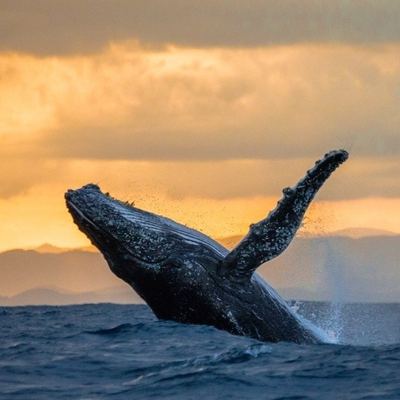
The water you look at from Front Street is the ʻAuʻau Channel — the stretch between Maui, Lānaʻi and Molokaʻi. It is shallow, it is sheltered by three islands at once, and there are no large predators working it. That combination is why humpbacks swim roughly three thousand miles from Alaska to reach it, and why they do their calving here rather than anywhere else in the North Pacific.
It matters for what you actually see. A mother with a days-old calf is not travelling; she is resting in flat water while the calf learns to breathe, which is why West Maui produces so much surface behaviour at close range — the animals are stationary and you are among them, rather than chasing a pod across open ocean.
Leaving from Mala or from Kaʻanapali puts you in that channel within minutes. There is no long transit to a whale ground, because the whale ground starts a few hundred yards offshore.
Most West Maui boats see the same animals in the same channel on the same morning. What differs is the experience of being aboard, and four things decide it. These are worth checking whoever you book with, including us.
On timing: morning trips generally get flatter water, afternoon and sunset trips get better light. Neither sees more whales — the channel does not empty at lunchtime.
Ask what happens if a trip finds no whales, whoever you book with. Ours goes again free, as many times as it takes; inside December – April it has not yet been needed.
Questions about which departure suits you? Call (808) 707-5751, or look at all three tours.
Check Dates & Book